The most effective in-store retail media networks don’t interrupt the shopping journey, they enhance it. Engage customers with relevant content at every touchpoint, helping brands connect with shoppers closer to the point of purchase while retailers retain ownership of the audience and media opportunity.
Create Engaging In-Store Experiences. Unlock Retail Media Value.

Trusted by Australia’s leading retailers and organisations













































































Your Screens, Your Audience, Your Media Network
A retail media network connects brands to customers across their shopper journey. In store, that means three things: the digital assets across your stores or branches, the advertising inventory you offer your suppliers, and the reporting that shows what ran, where and when.

Those assets go beyond screens on a wall; displays at the entry, in the aisle and at the counter, interactive kiosks, in-store audio where the format suits. Wherever a shopper looks or listens, a brand has a reason to be there.
For shoppers, the network helps them find a product, weigh up the options and decide. For your brand partners, it lands at the moment the decision is made. One network, two returns.
It also retires the print cycle. A price change costs artwork, print, freight and a fortnight; digital is one update, network-wide and fully auditable.
Engagis builds and runs the digital network. You build the media business on it, keeping the audience, the inventory and the commercial relationships. Monetisation stays with you: the revenue is incremental, and it is yours.
Great Shopper Experiences Power Great Retail Media Networks
When customer experience comes first, retail media becomes more effective. Engagis helps retailers create connected in-store environments that deliver value for shoppers, brands and the business alike.

A retail media network runs across a shopper’s whole day. They meet the brand in search, in their feed, on your site and in your app, then they walk into your store. In-store is the last of those moments and the closest to the transaction: they are in the aisle, the product is within reach and the decision is still open. Everything earlier builds the intent. In-store is where it converts.
It only works if the screen is worth looking at. A network built to help shoppers first, showing what is in stock, what it costs, what is worth considering and where to find it, earns attention. Attention is what your brand partners are actually buying, so the experience and the media value rise together rather than competing.
How an In-Store Network Comes Together
Five parts, delivered as one piece of work rather than five separate procurements:

Network design and hardware
We assess your store formats, work out what belongs where, then specify, source and install commercial-grade displays built to run all day. One partner is accountable for the whole estate.

Content and scheduling
Your team publishes once and controls what appears on which screens, in which stores, at which times. Campaign windows are defined up front, so a supplier booking and a merchandising message never collide.

Targeting and localisation
Segment content by location, store type, state, screen format or your own criteria. Localisation runs automatically across the network, so every store shows what is relevant to it without anyone updating screens by hand.

Integration
The digital signage network plugs into the systems you already rely on, including your DAM, CRM, POS and other data sources. Live API integrations and single sign-on mean it fits the stack you have rather than sitting beside it.

Measurement and reporting
Play-out records showing what ran, where and when, plus screen health and uptime across the network. Your brand partners get proof their campaign appeared; your operations team sees any screen that needs attention.
One Accountable Partner, End to End
Hardware, installation, connectivity, content operations, monitoring and SLA-backed support all sit with Engagis; not a patchwork of vendors and a CMS licence. It is a managed retail media network service: we build and operate the network, you run the media business on it.

It matters most before anything visibly breaks. Device health is monitored continuously across the network, so a player running hot, a display losing signal or a site dropping off the network raises an alert rather than waiting for someone in store to report a blank screen. Where a fault can be cleared remotely, it is. Where hardware needs replacing, that sits with us too, under SLA. And when a screen does go dark in a store 900 kilometres away, it is one call, not three, with no argument about whose fault it is.
Engagis has been building and running networks like this for Australia’s leading organisations since 2001.

Most marketing tries to reach shoppers before they walk in the door. New research from Grocery TV, in partnership with Media, Ads + Commerce, suggests that is the wrong end of the journey to spend everything on. The store is the last touchpoint before the decision, and increasingly it is where the decision actually happens.
Source: Grocery TV In-Store Shopper Perception Report, 2026.
Common In-Store Retail Media Formats
A retail media network is rarely one screen type. Most run four or five formats, each earning attention in a different way and each sold differently when you come to price the inventory.

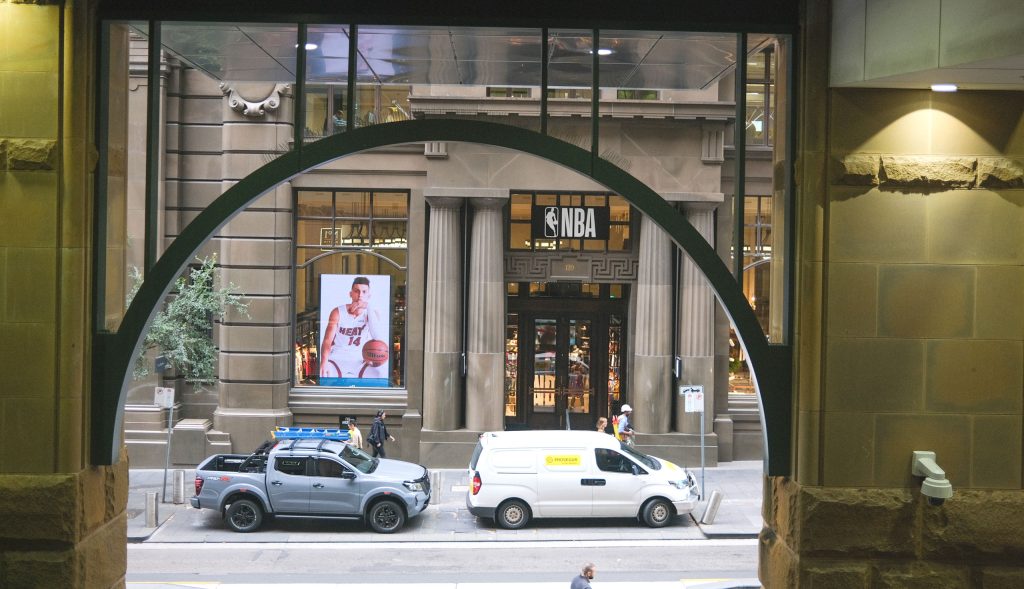
Entry and window displays
High-brightness displays stay readable in direct sun, so they work on the footpath before anyone walks in. Suited to campaign launches, seasonal messaging and category events.

Aisle and category bay screens
The closest format to the product, and the one supplier conversations usually start with. Range explainers, comparisons, promotional pricing and stock messaging in the bay where the choice is made.
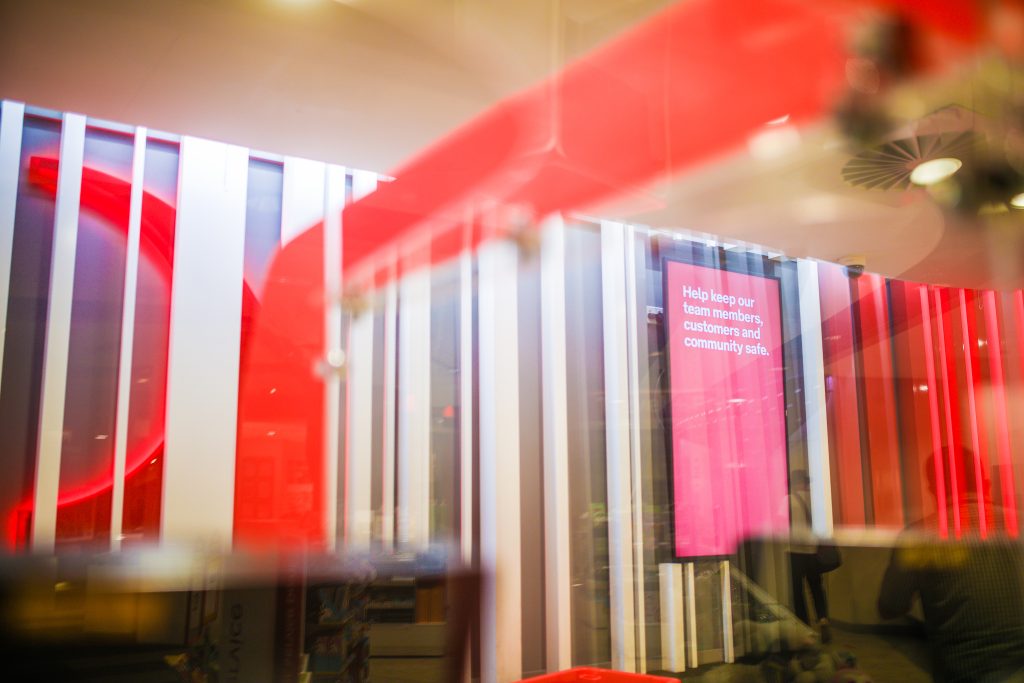
Checkout and service counter screens
Queue time is attention time. Impulse lines, add-on offers, loyalty sign-up and service messaging while a shopper is already stationary.
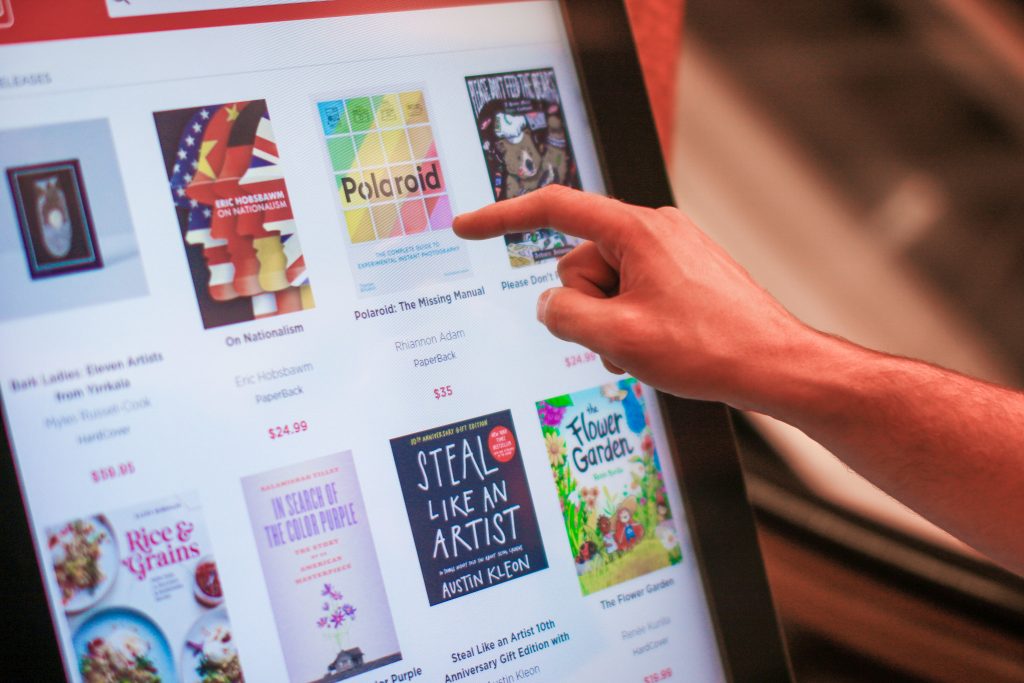
Interactive kiosks and touch screens
Wayfinding, range browsing and endless-aisle ordering. The only format that tells you what shoppers went looking for rather than what you showed them.
Large-format and feature displays
Front-of-store and destination zones, where the job is to set the tone of the store rather than sell a single line.

In-store audio and radio
Reaches shoppers whose eyes are on the shelf, with music setting the ambience and scheduled voice spots carrying the offers, planned in Impress by daypart, store or trigger alongside the screens.
Benefits for Retailers, Brands and Shoppers
The same network pays back three different audiences. Shoppers get a better trip through the store, guided to what they came for rather than left to hunt, brand partners get reach at the point of decision, and you get a revenue line that depends on both of those working.

For retailers
A revenue line that does not depend on more foot traffic or more stock. Supplier-funded, incremental and yours, sitting alongside the operational saving of retiring the print cycle and the merchandising control that comes with changing every store at once.

For brand partners
Reach at the point of decision, in the aisle where the product is within arm's length. Defined campaign windows, published creative specs and proof of what ran, where and when, so a buy can be planned and reported against rather than negotiated case by case.

For shoppers
A better experience in store. Content that helps rather than interrupts, answering what is in stock, what it costs and where to find it, at the point the question comes up.
The three move together. A network that serves shoppers earns attention, attention is what your brand partners are buying, and the revenue follows from both. Build it the other way around, as advertising space first, and there is less to sell each year rather than more.
The worry behind every retail media conversation is that the screens will cost you goodwill. Research from Vistar Media puts that at four per cent; only one shopper in twenty-five said in-store advertising detracted from their trip. What earns the other 95% is relevance, which is a content and targeting question rather than a hardware one.
Source: Vistar Media, 2025.

Measuring In-Store Retail Media Performance
Measurement is the live question in retail media right now. IAB Australia found inconsistent metrics across networks to be buyers’ leading measurement challenge, and the industry is closing that gap: IAB and IAB Europe have published in-store standards covering formats, store zones and impressions. A network built to those definitions is one a media buyer can plan against.

In practice, every network gets asked the same two questions, usually by different people. Did the campaign run as booked, and did it do anything. The network answers the first outright and supplies the exposure side of the second.
Neither answer sits on its own. Play-out data feeds into your own media and planning tools through live API integrations, so in-store reports alongside your onsite and offsite activity as one omnichannel campaign.
Frequently Asked Questions (FAQs)
What is an in-store retail media network?
Three things working together: the digital assets across your stores, the advertising inventory you offer your suppliers and the reporting that shows what ran, where and when. That covers screens at the entry, in the aisle and at the counter, interactive kiosks and in-store audio where the format suits. Engagis builds and runs the digital network. You keep the audience, the inventory and the commercial relationships.
How is a retail media network different from digital signage?
Digital signage is the screens and the software that runs them; a retail media network is what you build when you sell space on those screens to brand partners. The hardware can be the same. What changes is everything around it: defined inventory and campaign windows your suppliers can book, rules for how supplier content sits alongside your own merchandising, and reporting that proves each campaign ran as booked. Most retailers start with signage for their own promotions and add the media layer once the network is reliable and the reporting is in place. Engagis builds both on the one network, so moving from signage to retail media means adding inventory and reporting rather than replacing the estate.
Should we build retail media in-house or use a technology partner?
For most retailers, a mix of the two works best: keep the commercial side in-house and use a partner for the network. The parts worth owning are the ones that make it your media business: the audience, the inventory, supplier relationships, pricing and data. The parts that rarely pay to build yourself are the hardware, installation, monitoring, field service and content operations across hundreds of stores. That’s the split Engagis is built around. We build and run the network under SLA, and your team runs the media business on it, without giving away a revenue share or the supplier relationship. Retailers with an established media sales team often move faster this way, because they can put their effort into selling inventory instead of keeping screens running.
How do you measure in-store retail media performance?
In two layers: proof the campaign ran as booked, and the exposure data your team needs to connect it to sales. The network supplies the first outright: play-out records showing what ran, on which screen, in which store, at what time and how many times, plus uptime across the booked window. For the second, those records feed your own sales, loyalty and POS data through live API integrations, so your team can measure sales uplift and return on ad spend from your own data. Reporting follows the in-store standards published by IAB and IAB Europe, which IAB Australia also points to, so media buyers can plan against it the same way they plan other channels.
Can we run programmatic advertising on the network?
Yes. Engagis is integrated with Vistar Media, and Impress Plus has a range of APIs that can be used to connect to an ad server or programmatic platform of your choice (conditions apply), so programmatic demand can run alongside the campaigns you sell directly. Most retailers start by selling campaign windows directly to the suppliers they already trade with, then add programmatic demand to fill remaining inventory. Play ratio management in Impress Plus controls how much screen time is open to programmatic, and when, so supplier bookings and your own merchandising come first. Programmatic campaigns appear in the same proof-of-play reporting as direct ones. Either way, the revenue and the buyer relationships stay with you.
Can the network include in-store audio?
Yes. In-store audio and radio run on the same network as the screens, so music sets the ambience and scheduled voice spots carry offers and supplier messages to shoppers whose eyes are on the shelf. Audio is planned in Impress Plus alongside the screens, by daypart, store or trigger, so a campaign can run across screens and audio together.
Which retailers is in-store retail media suited to?
Any retailer whose suppliers want to reach shoppers at the point of decision, which covers most multi-site formats. It works best where there are repeat visits, a clear set of brand partners and a reason for shoppers to pause: supermarkets and grocery, pharmacy, convenience and fuel, liquor, specialty and department stores. Branch networks in banking and telco use the same approach to promote their own products and partner offers. That is commerce media: the same model, run by businesses outside traditional retail. The network assessment looks at your store formats, traffic and supplier base to show what your inventory is worth before you commit.
How do retailers make money from screens in their stores?
By selling defined campaign windows on that inventory to the brand partners you already trade with. The revenue is supplier-funded and incremental, so it does not depend on more foot traffic or more stock, and it sits alongside the operational saving of retiring the print cycle. Engagis does not sell the media on your behalf; the commercial relationship stays yours.
What does retail media actually look like in store, and what screens or devices do you recommend?
It depends on the store, which is why the network design comes before the hardware. In most estates it is a mix: high-brightness window or entry displays that stay readable in daylight, screens in the aisle or on the category bay closest to the product, smaller displays at the checkout and service counter, a large-format or feature display in a destination zone, touch kiosks where shoppers need to browse range or order, and in-store audio where the message suits listening rather than looking.
Everything we specify is commercial-grade and built to run store hours every day, paired with a managed media player and connectivity, because consumer televisions fail early and take a store visit to fix. We assess your store formats first, then recommend what belongs where rather than putting the same screen in every site.
Will it work with the screens and systems we already have?
Your existing displays are assessed as part of the network design. Commercial-grade screens built to run all day can usually be kept and brought under central management; consumer panels that were never specified for retail hours are the ones worth replacing, and you get that call in writing before anything is ordered. On the data side, the network plugs into the systems you already rely on, including your DAM, CRM and POS, through live API integrations and single sign-on.
Who makes the content?
Your team, your agency, your brand partners or ours. Engagis has in-house motion designers, content producers and digital creatives who take your brief and brand guidelines and turn them into content built for digital signage, kiosks and in-store experience rather than resized web banners: animated promotional content for campaigns and offers, static and motion content for wayfinding, service queues and compliance messaging, responsive HTML5 and data-driven templates, 3D and hero content for flagship sites, and localised or personalised variants at scale by location, state, division or offer eligibility. We work inside your existing brand system rather than reinventing it, storyboarding concepts, producing final creative ready for screen and feeding straight into scheduling, QA and in-store deployment, so you go from idea to live in market faster.
Where your team, agency or supplier produces the creative, the network handles publishing, scheduling and localisation instead. You publish once and control what appears on which screens, in which stores, at which times, and localisation runs automatically so no one is updating screens by hand. Creative specs are published up front, so a supplier can supply artwork that fits the format first time.
How long does a rollout take, and can we start small?
Timing depends on store count, formats and site conditions rather than the software. Most retailers start with a network assessment and a pilot across a small group of representative stores, then scale in waves once the design, the content workflow and the install pattern are proven.
Hardware and installation are managed by Engagis across Australia, so a national rollout runs to one standard rather than a different subcontractor in each state. Because the content model and the reporting are built for the whole estate from day one, expanding means adding stores to a running network rather than starting again. We scope the timeline against your actual store list at assessment rather than quoting a standard number.
What does it cost to run a retail media network?
Two parts. There is the build, covering hardware, installation and connectivity, and there is the ongoing cost of content operations, monitoring and SLA-backed support. Both scale with the number of sites and formats rather than sitting as a flat licence fee, so the assessment prices your store list rather than a generic estate. For the business case, the ongoing figure is the one to set against supplier-funded revenue and the print costs you retire.
What do we need to get this approved internally?
Approvals usually turn on three things: a costed scope against your real store list, a revenue view your commercial team is comfortable defending, and clear ownership of delivery risk. The network assessment produces the first and gives your team the inventory and campaign-window model to build the second. The third is the point of a single accountable partner, with hardware, installation, connectivity, content operations, monitoring and support all sitting with Engagis under SLA.
Most Australian retailers approve a pilot first, on a scope small enough to sign off inside an existing budget and large enough to produce the play-out, uptime and supplier-interest evidence the full case needs.
Your Digital Signage & AV Starts Here
Get expert guidance, reliable delivery, and ongoing support - end to end. Talk to our team about solutions tailored to your organisation.