Cloud-Based Digital Signage: Security, Uptime and Governance for Enterprise Networks

Ben Smith
An authority on digital transformation of physical spaces, Ben has 20+ years helping top-tier companies improve their customer and staff experience.
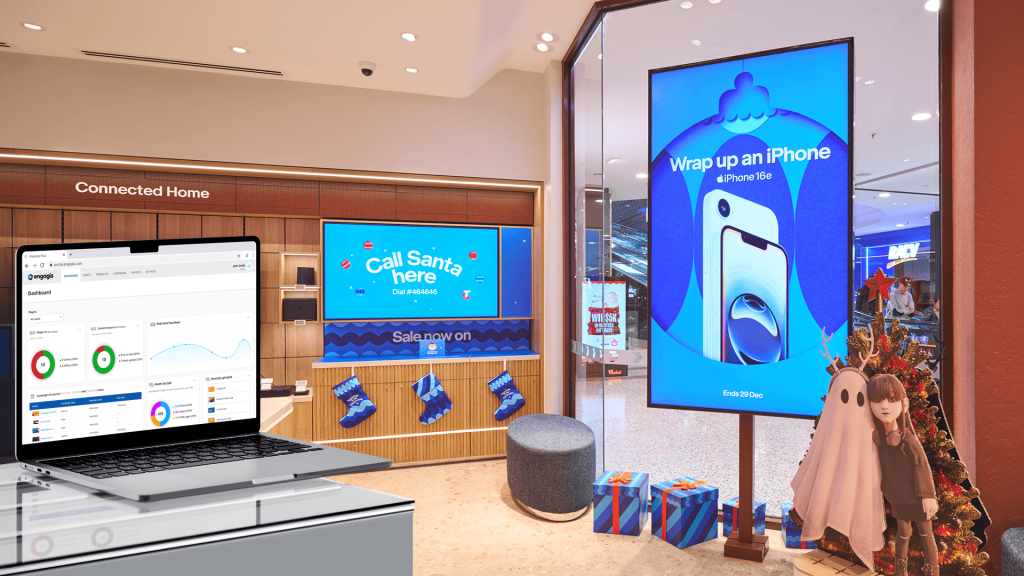
For an enterprise IT team, the real questions around digital signage cloud software are not how scheduling works, they are where data is hosted, what certification the platform holds, what uptime is guaranteed, and who controls access across a large organisation. Engagis operates Impress Plus, an Australian-owned and hosted digital signage platform, built to enterprise governance standards. This guide covers cloud digital signage from that angle.
What Makes Digital Signage Cloud-Based, and Why Does It Matter for IT?
Cloud-based digital signage means content, scheduling and device management run through a hosted platform accessible from any internet-connected device, rather than software installed and maintained on a local server. For IT teams, that shifts the priority from server maintenance to vendor security posture.
Once a signage platform moves to the cloud, the questions IT teams need answered change. It stops being about patching a local server and starts being about where the vendor hosts data, how they certify their security practices, and what access controls exist once staff across many locations can log in.
How Secure Is a Cloud Digital Signage Platform?
Platform security for cloud digital signage depends on data hosting location, independent certification, and access control granularity. An ISO 27001-certified, Australian-hosted platform gives an enterprise IT team a clear, auditable answer to where data lives and how it is protected.
- Hosting location. Australian-hosted infrastructure keeps data under Australian jurisdiction, which matters for many enterprise compliance requirements.
- Certification. ISO 27001 certification means the vendor’s information security management has been independently audited, not just self-declared.
- Access control. Role-based permissions and single sign-on support let IT enforce the same identity and access policies used across the rest of the business.
- Content approval workflows. Structured publishing workflows prevent unapproved content going live across a network, which matters as more people gain platform access.
What Uptime and Reliability Should Enterprise Buyers Expect?
Enterprise digital signage networks should run on a defined uptime service level agreement, typically around 99 percent, backed by automated device monitoring rather than manual checks.
Device heartbeat monitoring is the mechanism that makes this possible. Connected devices are checked continuously for application changes, playlist updates or faults, so a screen going offline is flagged automatically rather than discovered when a customer notices a blank display. A restart-on-crash feature, which automatically relaunches the platform after an unexpected fault, reduces the practical impact of most software-level issues without needing a support call.
For a network spread across many locations, proactive monitoring backed by a clear service level agreement matters more than any single feature in the content editor, since it directly determines how much manual oversight the network needs day to day.
How Does Cloud Digital Signage Handle Governance Across Many Locations and Teams?
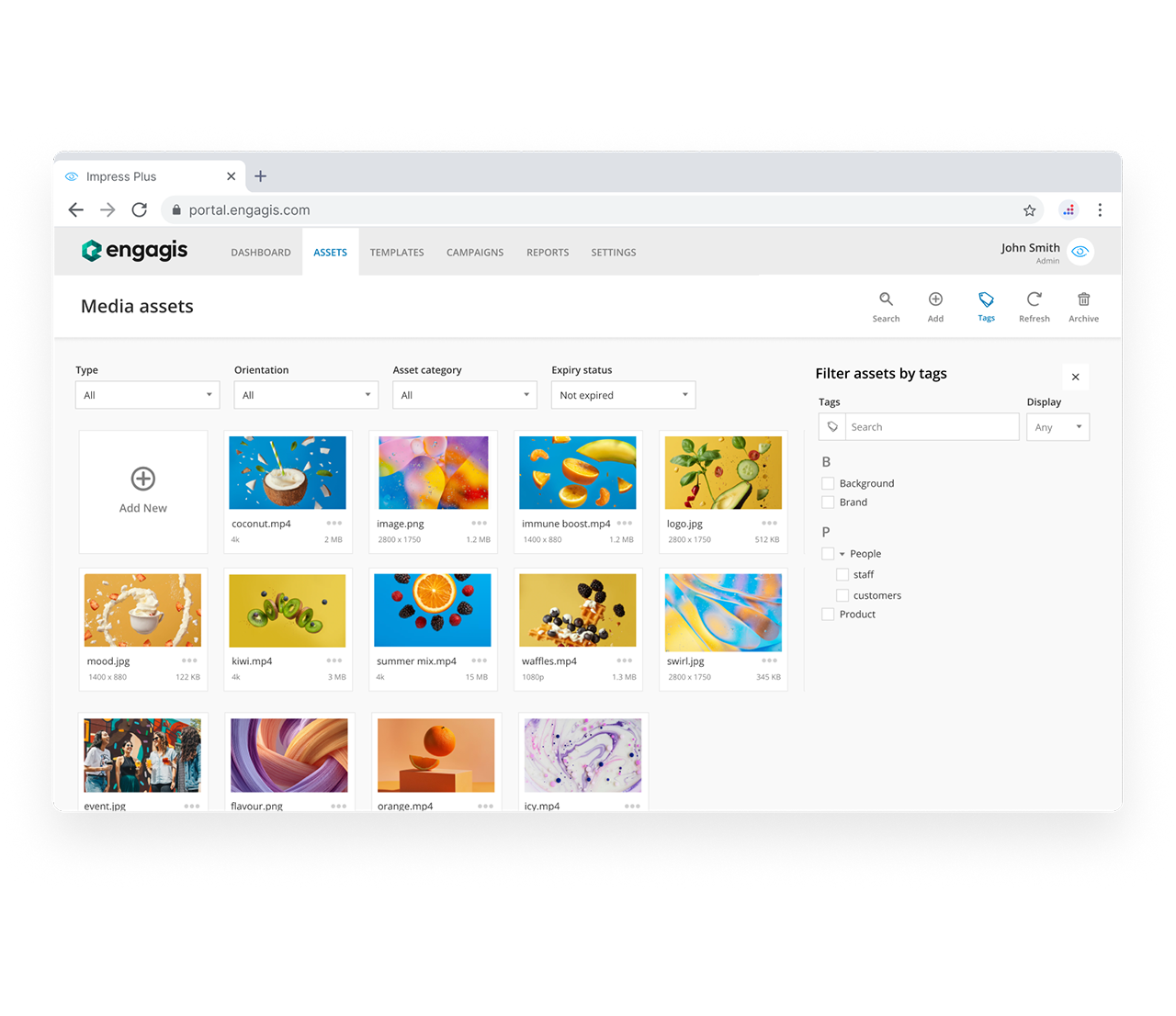
Governance in a cloud digital signage platform comes down to role-based permissions, segmentation by location or content type, and clear audit visibility into what was published, where, and by whom.
A national retailer with regional marketing teams, for example, needs a platform where a regional team can publish local promotions without being able to alter national brand campaigns. Segmentation by store type, state, or business rule keeps every location on brand while still allowing local flexibility where the business wants it. Sharing campaign previews and reporting externally, without granting full platform access, is another governance feature that matters once agencies or external partners need visibility without administrative control.
What Integrations Should a Cloud Digital Signage Platform Support?
A cloud digital signage platform built for enterprise use should integrate with a business’s existing digital asset management, CRM and point of sale systems through live API connections, along with single sign-on support.
This matters because content automation depends on it. A retailer wanting pricing or stock levels to update on screen automatically needs the signage platform to plug directly into the systems that already hold that data, rather than relying on someone manually rebuilding content every time something changes. Single sign-on support also means the platform fits into an existing identity management setup instead of becoming a separate login system IT has to manage on its own.
It is worth treating integration capability as a security question as much as a convenience feature. Every system a signage platform connects to is a potential access point, so a vendor offering clearly documented, authenticated API connections, rather than loosely governed data exports, gives an IT team a much smaller and more auditable surface area to manage as the number of integrations grows over time.
Frequently Asked Questions
Where should enterprise digital signage data be hosted?
Australian-hosted infrastructure is the safest default for Australian enterprise deployments, keeping data under local jurisdiction and simplifying compliance conversations.
What certification should a digital signage vendor hold?
ISO 27001 is the standard to look for. It confirms a vendor’s information security management has been independently audited rather than self-reported.
What uptime should an enterprise digital signage network expect?
Around 99 percent is a reasonable enterprise benchmark, backed by proactive monitoring and a clearly defined service level agreement rather than a vague promise.
Can different teams have different levels of access to a cloud signage platform?
Yes. Role-based permissions let a platform give a regional team local publishing rights while restricting access to national brand campaigns or platform-level settings.
Does cloud digital signage work with single sign-on?
Enterprise-grade platforms typically support single sign-on, letting IT manage signage platform access through the same identity system used across the rest of the business.
The Bottom Line
For an enterprise IT or security team, evaluating digital signage cloud software comes down to hosting, certification, uptime and governance, not just scheduling features. Engagis is ISO 27001 certified, and Impress Plus is built on that certified security foundation.
Talk to the Engagis team about security, uptime and governance for your digital signage network.
You Might Be Interested In

Retail Media vs Commerce Media: What’s the Difference?

Digital Signage Solutions: A Complete Guide

LED vs LCD Advertising Screens Compared
Your Digital Signage & AV Starts Here
Get expert guidance, reliable delivery, and ongoing support - end to end. Talk to our team about solutions tailored to your organisation.