LED vs LCD Advertising Screens Compared

Martin Uhr
An expert in digital signage, Martin consults with nationally recognised brands to help develop, plan and deliver large-scale digital signage projects.

For advertising specifically, LED advertising screens outperform LCD in direct sunlight, large formats and outdoor locations, while LCD remains the stronger choice for indoor advertising viewed at close range. Engagis supplies and installs both LED and LCD advertising screens for retail, transport and out-of-home campaigns across Australia. This guide compares the two specifically for advertising use, not general digital signage.
What Is the Core Difference Between LED and LCD for Advertising?
LED screens are built from individual light-emitting modules and generate their own brightness, while LCD panels rely on a backlight shining through a liquid crystal layer. For advertising, that difference shows up mainly in outdoor brightness, viewing distance, and screen-size flexibility.
An LED display screen can be built in almost any size or shape by joining panels together, which makes it suited to large format advertising such as building facades and feature walls. LCD panels come in fixed sizes, which is not a limitation for most indoor advertising placements but does rule LCD out for very large format outdoor campaigns.
How Do LED and LCD Compare for Outdoor Advertising?
LED consistently outperforms LCD for outdoor advertising, mainly on brightness. An outdoor LED screen typically reaches 2500 nits or higher, remaining readable in direct sunlight, while most LCD panels struggle above 1000 nits and wash out in bright outdoor conditions.
Weatherproofing is the second factor. LED signage boards built for outdoor use carry an IP65 rating or higher as standard, protecting against dust and water ingress. LCD panels can be weatherproofed for outdoor use, but this typically adds cost and is less common than it is for LED, since LED was built with outdoor deployment in mind from the start.
Heat management is a less obvious but equally important factor for outdoor advertising screens. LED modules dissipate heat more evenly across a large surface, which matters over a full Australian summer where a poorly ventilated outdoor screen can throttle brightness or fail early. LCD panels adapted for outdoor use generally need additional cooling built into the enclosure to manage the same conditions, which is part of why outdoor-rated LCD costs more than its indoor equivalent.
How Do They Compare for Cost in an Advertising Deployment?
LED advertising screens usually cost more upfront than an equivalent size LCD panel, but the gap narrows once viewing distance and format flexibility are factored in for a specific advertising campaign.
For a large format outdoor advertising screen, LED is often the only realistic option regardless of cost, since LCD is not built to the scale or brightness the placement needs. For a smaller indoor advertising screen viewed at close range, such as an end-of-aisle retail display, LCD is typically the more cost-effective choice, since LED pixel pitch becomes an unnecessary expense once viewers are standing close to the screen.
Which Is Better for High-Traffic Retail and DOOH Advertising?
LED generally wins for high-traffic, distance-viewed advertising such as shopping centre feature walls and roadside digital out-of-home campaigns, while LCD wins for close-range, high-frequency advertising such as shelf-edge and point-of-sale screens.
| Factor | LED Advertising Screens | LCD Advertising Screens |
| Best environment | Outdoor, large format, direct sunlight | Indoor, close to medium viewing distance |
| Typical brightness | 2500 nits or higher, outdoor-rated | 350 to 1000 nits |
| Weatherproofing | IP65 or higher common as standard | Available but less common, added cost |
| Format flexibility | Modular, near any size or shape | Fixed panel sizes |
| Typical advertising use | Building facades, DOOH, stadium boards | End of aisle, shelf-edge, point of sale |
How Do You Choose Between LED and LCD for an Advertising Screen Deployment?
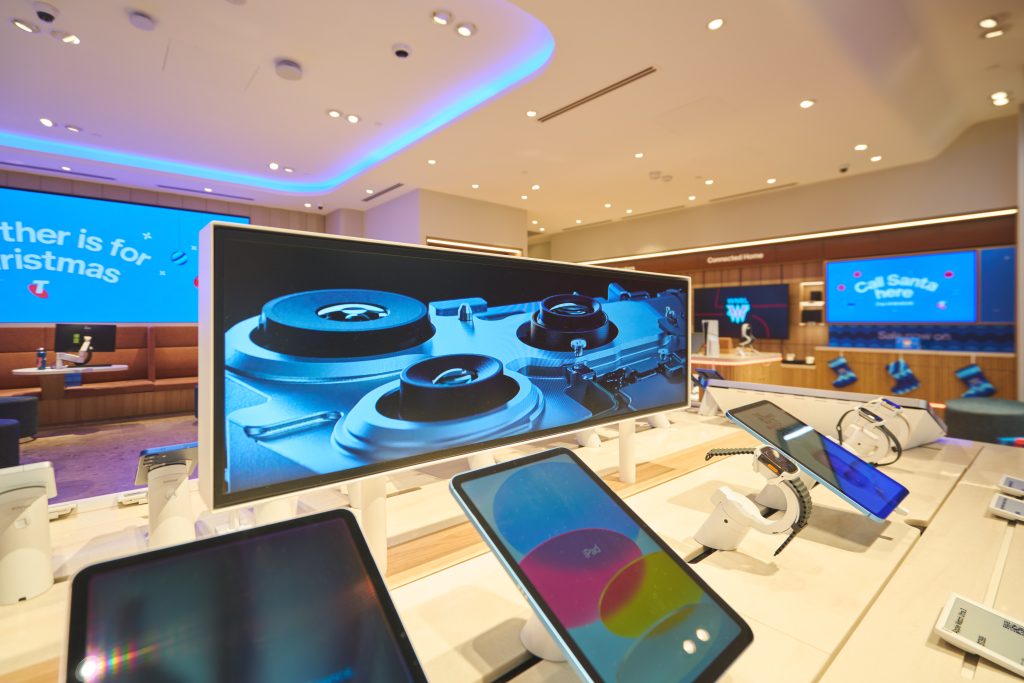
The choice comes down to four questions specific to the advertising placement, viewing distance, indoor or outdoor, screen size, and campaign format.
- How far away will most viewers be standing or driving past?
- Is the screen indoor, outdoor, or exposed to weather?
- Does the campaign need a non-standard size or shape?
- Will content be static, video, or synced across multiple advertising panels?
An advertising screen quoted as LED for an indoor, close-range placement is worth questioning, since it is rarely the most cost-effective option at that scale. The reverse is also true. An outdoor, large-format campaign quoted on LCD is unlikely to deliver the brightness the placement needs.
Content format is worth confirming alongside hardware, since it changes what actually performs well on each screen type. Fast-moving video content designed for a roadside LED board can look cluttered on a smaller indoor LCD panel viewed up close, while a static, detail-heavy layout designed for a shelf-edge LCD screen loses most of its impact when scaled up to a large format outdoor LED display. Matching the creative to the hardware, not just the hardware to the location, makes a measurable difference to how an advertising campaign actually performs once it goes live.
Frequently Asked Questions
Is LED always better than LCD for advertising?
No. LED wins for outdoor and large format advertising, but LCD is usually the more cost-effective and equally effective choice for indoor, close-range advertising such as shelf-edge displays.
Can LCD screens be used outdoors for advertising?
Yes, with the right weatherproofing and a high-brightness panel, though this typically costs more than an equivalent LED outdoor screen built for that environment from the start.
What brightness does an outdoor advertising screen need?
Around 2500 nits or higher is the general benchmark for direct sunlight readability, which is why outdoor advertising deployments lean heavily toward LED.
Is LED more expensive than LCD for advertising screens?
Usually yes upfront, though for large format or outdoor placements LED is often the only viable option regardless of cost, since LCD cannot match the brightness or format flexibility needed.
What is pixel pitch, and does it matter for advertising screens?
Pixel pitch is the distance between LED diodes, and it determines how close a viewer can stand before individual pixels become visible. It matters far more for close-range advertising than for large format displays viewed from a distance.
The Bottom Line
Choosing between LED advertising screens and LCD for a specific campaign comes down to viewing distance, environment and format, not which technology sounds more advanced. Engagis supplies and installs both LED and LCD advertising screens for retail, transport and outdoor campaigns across Australia.
Talk to the Engagis team about the right screen technology for your next advertising deployment.
You Might Be Interested In
Retail Media vs Commerce Media: What’s the Difference?
Digital Signage Solutions: A Complete Guide
Cloud-Based Digital Signage: Security, Uptime and Governance for Enterprise Networks
Your Digital Signage & AV Starts Here
Get expert guidance, reliable delivery, and ongoing support - end to end. Talk to our team about solutions tailored to your organisation.