Retail Media vs Commerce Media: What’s the Difference?

Ben Smith
An authority on digital transformation of physical spaces, Ben has 20+ years helping top-tier companies improve their customer and staff experience.
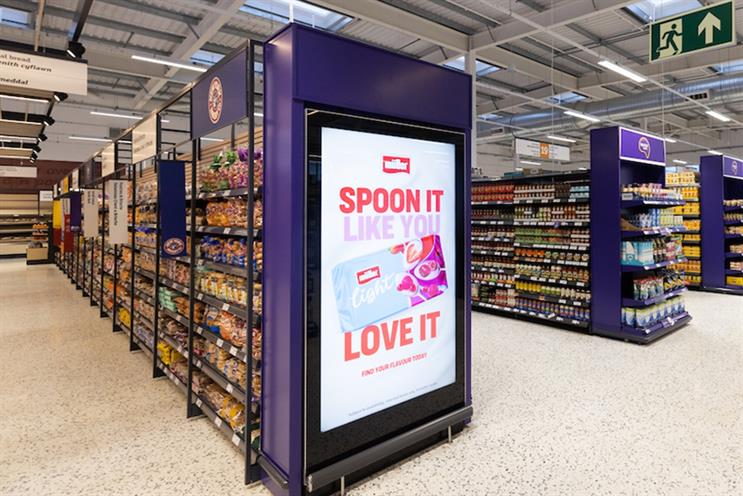
Retail media may feel like a product of the digital advertising era, but the idea behind it is much older. Retailers have always controlled something brands value: access to customers at moments when a purchase is being considered. Shelf position, window displays, catalogues and promotional space all turned that access into a commercial asset long before anyone called it media.
From shelf space to measurable media
Loyalty programs made that value easier to see. By connecting individual customers with their purchase behaviour over time, retailers could offer brands something more useful than broad demographic assumptions: evidence of what people actually bought, how often they returned and which categories mattered to them.
Digital platforms added the final pieces: real-time targeting, scalable inventory and reporting that could connect an ad exposure with a purchase. Retail media became a distinct category because retailers could combine audience access, first-party shopping data and a place to influence the sale.
It did not take long for other organisations to recognise the same structural advantage. Banks, airlines, delivery platforms, telcos and other businesses also hold direct customer relationships, meaningful transaction signals and moments of attention. Commerce media has emerged as the broader term for applying this model across those environments. The boundary is still evolving, but the simplest distinction is useful: retail media applies the model within retail, while commerce media extends it across a wider range of customer and transaction journeys. The pattern is not local: IAB recorded commerce media growth of 18% year on year in the United States, and the UK market is estimated to be growing around 17% (both cited by IAB Australia, July 2026).
The short answer
Retail media is advertising run by a retailer across its own or extended channels, using shopping and purchase data to connect brands with shoppers. Commerce media is the broader model: it uses direct customer, transaction and contextual signals to deliver relevant advertising or commercial content across retail and non-retail environments. The Australian market is already material: retail media here is valued at just over $2 billion and is projected to double by 2030 (Mars United Commerce and Tenet Advisory, IAB Australia Commerce & Retail Media Summit, July 2026), with WPP Media forecasting it will pass total TV ad revenue in Australia for the first time in 2027.
Put simply, retail media applies the model within retail; commerce media carries it across a wider range of customer journeys and transaction-rich sectors. A sponsored product in a retailer’s search results is retail media. An airline presenting a relevant partner offer after a booking, or a bank promoting a service in its branches, sits more naturally within commerce media.
The boundary is not absolute. Retail media networks increasingly operate beyond retailer-owned channels, while commerce media platforms can include traditional retailers. A useful way to read the distinction is therefore by emphasis: retail media centres on the shopping relationship; commerce media centres on the broader customer or transaction relationship.
What is Retail Media?
Retail media is advertising run by a retailer using its own audience, its own channels and its own shopping data. The retailer already holds what a brand wants: a place where people are actively choosing products, a direct customer relationship and a record of what those customers buy. Retail media turns that position into a channel suppliers and brands can buy.
In practice, a retail media network is three elements working together: the digital touchpoints across the retailer’s sites, apps and stores, the inventory those touchpoints create for brand partners, and the reporting that shows what ran and where. Because the retailer sees both the exposure and the transaction, it can usually connect the two.
- Who runs it: a retailer with a shopping destination and a direct customer relationship.
- Who usually advertises: suppliers and brands sold by the retailer. An endemic advertiser is one whose products the retailer already stocks. A non-endemic advertiser sells something the retailer does not carry, such as a bank, an insurer or an airline, and many networks now accept them.
- Where it appears: onsite (sponsored products, brand pages, banners and tiles, the retailer’s app and email) offsite (campaigns powered by retailer data across social and the web), and in-store (at the entry, in the aisle and at the counter, including screens, kiosks and in-store audio where the format suits).
- What powers it: browsing, product, transaction and loyalty signals within the retailer’s ecosystem.
- What it usually aims to do: capture active shopping demand and influence a product purchase close to the point of sale.
- What makes it measurable: the retailer can often connect exposure with a subsequent purchase, including at product level. Closed loop measurement is the practice of matching ad exposure against sales data held by the same organisation, so a campaign can be tied to what people actually bought.
A simple example shows why this works. A shopper searches a supermarket’s app for coffee and sees a sponsored result for a brand launching a new blend. They don’t buy at the time, but later that week they walk into their local store and a screen on the coffee bay carries the same offer as they reach the shelf. The placement is useful because of context rather than volume: the retailer knows the shopper was active in the category, the message lands where the decision is made, and the purchase that follows can be connected back to the ad that prompted it.
What is Commerce Media?
Commerce media is the use of an organisation’s own customer touchpoints, and the data behind them, to deliver relevant content and advertising in the places people already shop, bank, refuel and pay. Retail media is one form of it. The wider category covers any organisation that can use owned customer environments, data and attention to deliver relevant content, create advertising value and keep control of the channel.
The defining asset is the customer relationship rather than a product catalogue. Banks, healthcare networks, telcos, fuel and convenience operators, gaming venues, quick-service restaurants and government services all hold an audience and a moment of attention: people browsing, waiting for an appointment, queuing at a service point or standing on a forecourt. What changes by sector is the content and the commercial model, not the principle.
That also widens what the channel can do. Retail media largely meets demand that already exists. Commerce media can create or redirect it as well, because the operator sees moments a retailer never does: a flight booked, a loan approved, a plan renewed, a tank filled. And because the advertiser pool is not limited to suppliers, the same space can carry third-party brands, partner offers or the operator’s own products and services. The constraint that removes is a real one: two thirds of active Australian buyers use retail media only for products carried by the retailer or marketplace, which holds the channel to endemic activity (IAB Australia, Retail and Commerce Media State of the Nation 2026).
- Who can run it: any organisations with direct customer relationships, meaningful transaction or service signals and owned touchpoints.
- Where it appears: digital and physical environments across stores, branches, waiting rooms, queue and service points, forecourts, payment journeys, booking flows, delivery apps, venues and other customer-facing moments.
- What it can promote: third-party advertising, adjacent partner offers, or the operator’s own products and services.
- What powers it: transaction history, spend patterns, frequency, location, service behaviour and other first-party context, depending on the operator.
- What it usually aims to do: capture, create or redirect demand across a wider customer journey, including cross-sell and post-transaction moments.
- What makes it distinctive: the operator does not need to sell a product catalogue; the valuable asset may be the transaction relationship itself.
The range is easiest to see through examples. A bank uses spending patterns to present a relevant offer in its app, then promotes the same service on screens in the branch. An airline introduces an adjacent travel service once a booking is confirmed, when the need has just become real. A fuel network carries a campaign for an automotive brand it does not stock. A clinic screen combines useful service information with approved partner content while people wait. Each of these sits before, during or after a transaction rather than beside a product on a shelf, and each works across digital and physical touchpoints.
Retail Media vs Commerce Media, side by side
Most of the confusion between the two models comes from how much they share. Setting the same questions against each makes the differences that do matter easier to see: who runs the network, where the inventory sits, what signal gives it value, who buys it, what it is for, when it reaches the customer and what it can prove.
| Question | Retail Media | Commerce Media |
| Who operates it? | A retailer | Any suitable transaction-rich or customer-rich organisation, including retailers |
| Where does inventory live? | Retailer sites, apps, stores and retailer-data-powered offsite media | Owned and extended channels across shopping, service, payment, booking and post-transaction moments |
| What is the core signal? | Browsing, product, loyalty and purchase behaviour within a retail ecosystem | Transaction, spend, frequency, service and contextual signals across the operator’s customer relationship |
| Who usually advertises? | Often endemic suppliers and brands sold by the retailer | Endemic brands, non-endemic advertisers, partners or the operator itself |
| Primary use | Capture active demand and drive product sales | Capture, create or redirect demand; support acquisition, cross-sell, service uptake or lifetime value |
| Moment of influence | Often search, browse and in-store product decisions | Across the full journey, including transaction and post-transaction moments |
| Typical measurement | Often mature closed-loop and product-level attribution | Varies by implementation; may include conversion, cross-sell, service uptake and longer-term customer value |
The split is not binary in practice. BCG maps commerce media across two axes: the business model, whether it sits in retail or beyond it, and the advertisers it attracts, whether endemic or non-endemic. That produces four positions rather than two categories. A supermarket network selling to its own suppliers sits in one corner as a legacy retail media network. A retailer opening the same inventory to brands it does not stock moves into extension. A non-retail operator selling to brands that trade on its platform sits in marketplace or service, and one partnering with adjacent brands to improve the customer experience sits in lifestyle. Most operators can locate both where they are now and where the next step would take them.
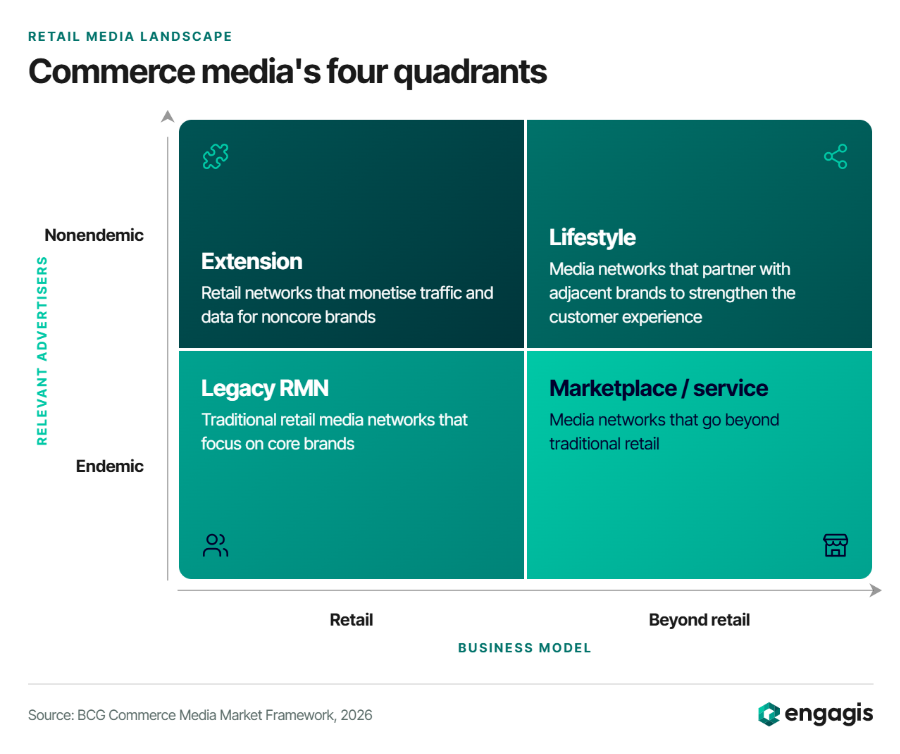
Source: BCG, Commerce Media Is Rewriting the Rules of Customer Connection (2025).
Where Retail Media and Commerce Media overlap
Retail media and commerce media rest on the same foundations, and an operator building one is doing most of the work required for the other.
Both start with an audience the organisation already has, reached through touchpoints it already controls, so neither depends on buying that access back from someone else. Both use customer, transaction or contextual data to make a message more relevant than a general-audience buy could be. And both run across onsite, offsite and physical channels: a screen in a store, branch or forecourt counts as much as a placement on a page or in an app.
They also fail in the same ways. Each depends on content operations, reliable delivery and reporting an advertiser can trust, because a network that cannot show what played, where and when is not yet a media channel. Each works best when the customer experience comes before the advertising opportunity, since relevance is what keeps an audience worth selling in the first place. This is why the terms blur in practice: the label describes the setting, but the work of building the network is largely the same either way.
Measurement is where that reporting requirement gets specific, and it has two layers. The first is proof of play. Proof of play is the verified record of what ran, on which screen or page, in which location, at what time and how many times. That record is what a brand partner is invoiced against and what an operations team uses to spot a screen that needs attention. The second layer is closing the loop, matching those exposures against the operator’s own sales, loyalty or transaction data so a campaign can be connected to what people went on to do.
Retail media is furthest along here, because the retailer holds the purchase record and can often report at product level. Commerce media closes the loop differently depending on the operator, against a conversion, a service uptake, a cross-sell or longer-term customer value rather than a basket line. Worth keeping the two layers distinct in any media conversation: proof of play evidences delivery, while attribution evidences effect and depends on data the operator owns. IAB Australia names measurement as the industry’s defining challenge, citing inconsistent metrics across networks and limited incrementality capability (Retail and Commerce Media State of the Nation 2026). IAB and IAB Europe jointly published in-store standards covering formats, store zones and impressions. Those standards were released in December 2024, and IAB Australia’s own Australian Retail Media Measurement Principles and Guidance draws on them. A network built to those definitions is one a media buyer can plan against.
Why the distinction changes your media plan
The label changes the assumptions behind the model. Retail media usually implies a retailer, a shopping destination, supplier demand and a direct connection to the products sold. Commerce media opens the same model to other sectors, broader transaction signals, additional customer moments and non-endemic relationships. Australian buyers are already funding both: 63% of active buyers increased spend on retailers’ own sites and apps and 65% increased spend on retailer-powered advertising beyond them, with investment increasingly reallocated from other channels rather than added at the margin (IAB Australia, Retail and Commerce Media State of the Nation 2026).
Four things follow from that. It changes who can operate a network, because the requirement is a direct customer relationship rather than a shelf. It changes where the inventory appears, moving beyond the aisle and the product page to the branch, the forecourt, the booking flow and the waiting room. It changes which signal gives a placement its value, whether that is category browsing or a confirmed transaction. And it changes what the measurement can reasonably prove, from a product-level sale to a service uptake or a longer-term customer relationship.
For an advertiser, that turns into a straightforward planning question. Retail media suits an objective to reach people already considering a product inside a particular retailer’s environment. Commerce media suits an opportunity that depends on a transaction or service moment away from the shelf, particularly acquisition, cross-sell or adjacent intent.
The useful contrast is demand capture versus adjacent demand. A sponsored product reaches someone already shopping the category. An offer presented after a flight booking responds to a need that has only just been confirmed. Either can be the right buy, which is why an opportunity is better judged on the quality of the customer signal, the relevance of the moment and the credibility of the measurement than on the category label.
What it looks like in practice
The split is easiest to read against networks that already exist. Each of these is live in the UK or the US, and each sits in a different part of the picture.
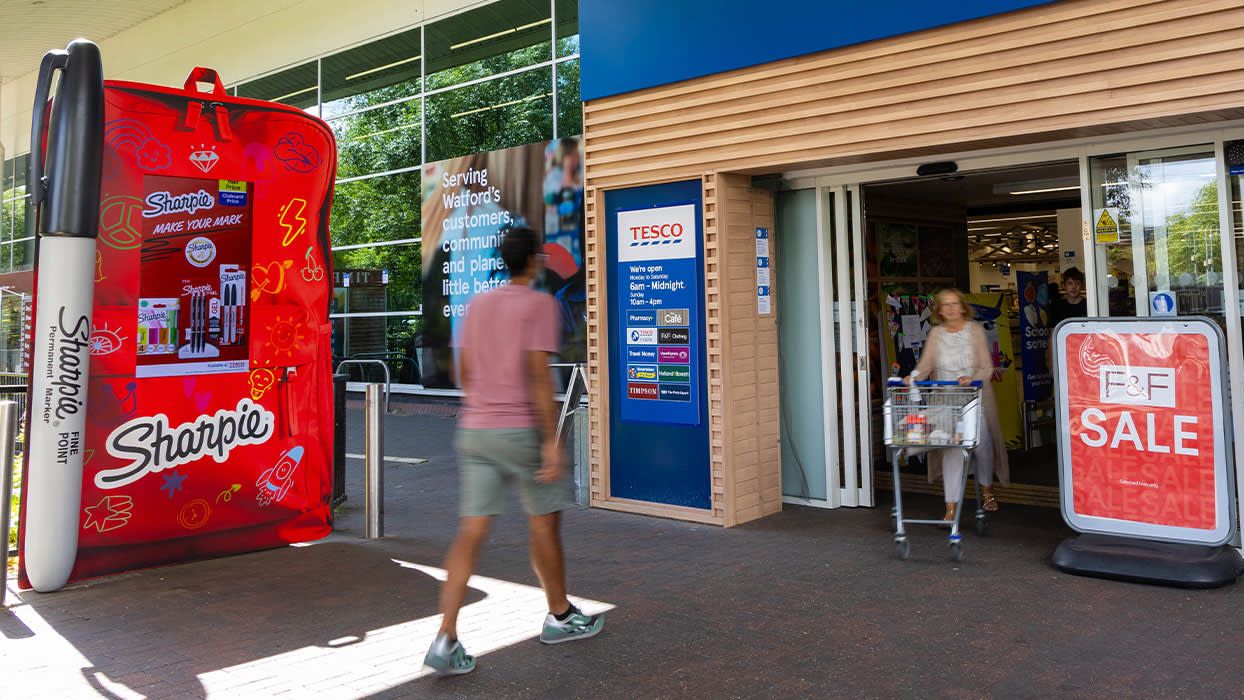
- Tesco, UK: brands buy sponsored placements across Tesco’s own site and app, targeted with Clubcard purchase data and measured through data clean rooms. A data clean room is a secure environment where a retailer and a brand match their data sets to measure a campaign without either side seeing the other’s customer records. Retail media in its most established form, and the largest digital retail screen network in Europe alongside it.
- Sainsbury’s Live, UK: Nectar360 sells supplier campaigns across a national network of more than 320 full-motion screens at store entrances, now expanding past 800 connected screens. Retail media in a physical environment, priced against the Nectar audience.
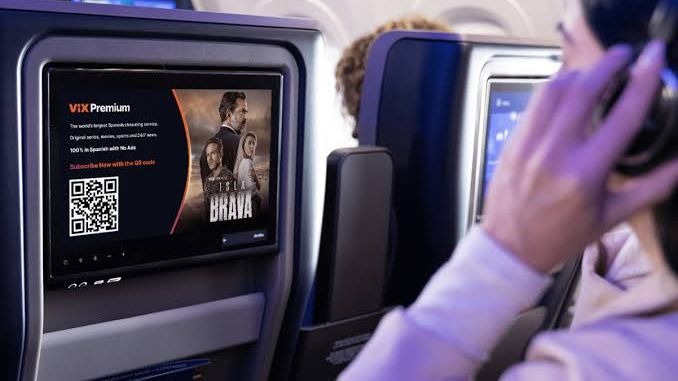
- Kinective Media by United Airlines, US: United sells advertising across its mobile app and close to 100,000 seatback screens, using travel behaviour to decide what is relevant. Commerce media built on a confirmed booking and several hours of captive attention.
- Chase Media Solutions, US: the bank opened its customer base of around 80 million to advertisers including Air Canada, delivering brand offers inside the Chase app against real spending behaviour. Commerce media where the format is an offer rather than an ad.
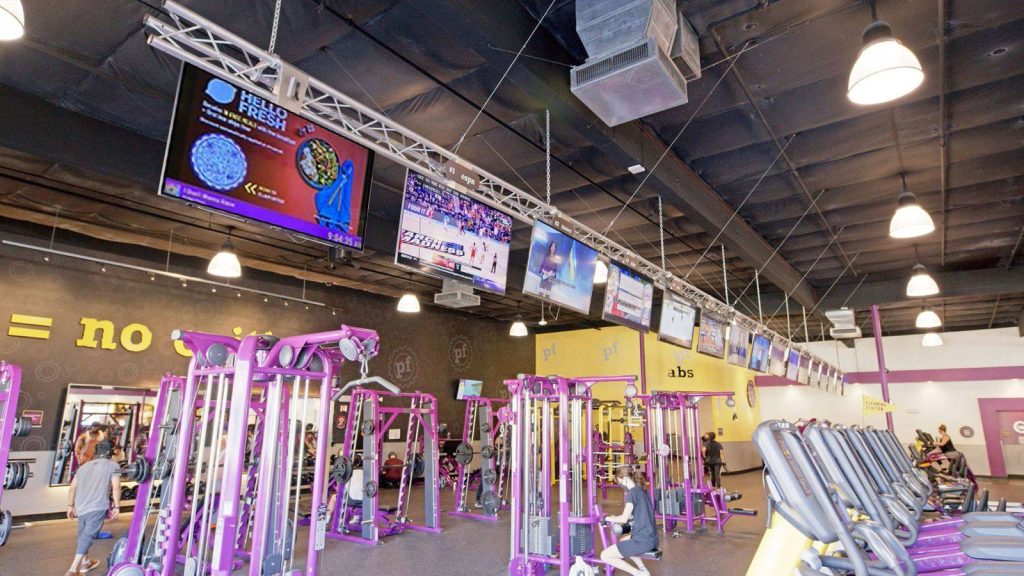
- PF Media Network by Planet Fitness, US: the gym chain opened its clubs and digital channels to consumer brands and agencies. Commerce media with an entirely non-endemic advertiser pool and no product catalogue behind it.
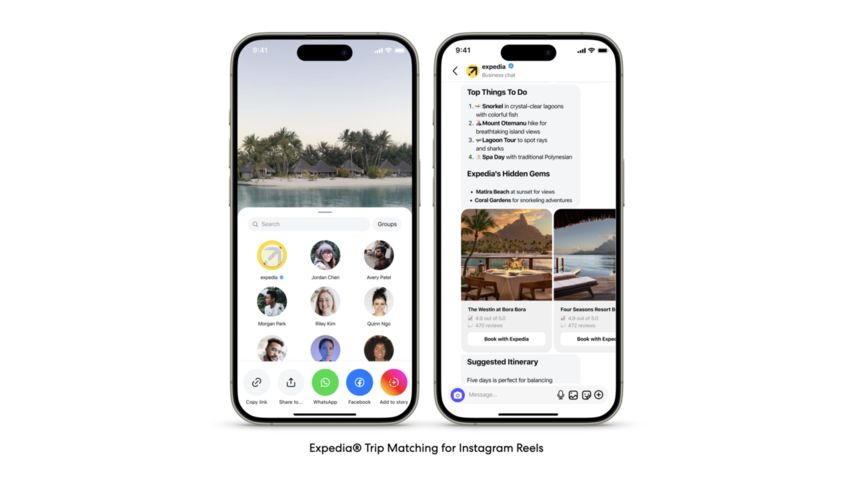
- Expedia Group Media Solutions, US and UK: Expedia sells onsite search and display against travel intent, and extends the same audiences offsite into video and connected TV. Commerce media from a marketplace rather than a retailer, reaching people mid-decision.
The shape is the same in every case: an audience the operator already has, a signal it already holds and a moment worth buying. Only the setting changes.
Common misconceptions, answered
Four misreadings come up often enough to be worth answering directly.
Commerce media is just a new name for retail media.
It is broader on both counts. Retail media describes a retailer selling access to its own shoppers. Commerce media describes the same mechanic applied by any organisation with a customer relationship worth advertising against, which changes the sectors involved and the commercial model with them.
You need to sell third-party advertising for it to count.
Many operators start by promoting their own products, services and customer messaging, and some never take outside advertisers at all. Owned, targeted, measurable inventory holds its value whether the advertiser is a supplier, a partner or the business itself.
It only happens online.
Physical environments are central to both. A screen at a store entrance, a service counter or a forecourt reaches someone who is already present and already deciding, which is closer to the transaction than most digital placements get.
Any screen network is a media network.
The screens are the easy part. A media channel also needs audience relevance, content governance, delivery that holds up store hours every day and reporting a buyer will accept. Without those, an operator has a signage estate rather than inventory it can sell.
Which label applies to your network
If the operator is a retailer using shopping data and retail channels to connect brands with shoppers, retail media is the clearest label. If the same underlying model is powered by a broader transaction or customer relationship – particularly outside retail or across service, payment and post-transaction moments – commerce media is more useful. The categories overlap, but the distinction helps explain who owns the audience, what signal powers the placement, where the inventory appears and what success looks like.
Frequently Asked Questions
Is retail media part of commerce media?
Yes. Commerce media is the broader category and retail media is the retail expression of it. A retail media network uses shopping and purchase data inside a retailer’s own environment. Commerce media applies the same model wherever an organisation holds a direct customer relationship and a transaction signal.
Can an organisation that is not a retailer run a media network?
Yes, though it is usually called commerce media rather than retail media. The requirement is a direct customer relationship, a meaningful transaction or service signal and owned touchpoints, not a product catalogue. Banks, airlines, gyms and fuel networks all run networks on that basis.
What counts as in-store retail media?
In-store retail media is advertising inventory that uses retail data for planning, execution and measurement inside a physical store. It covers entrance and aisle screens, kiosks, smart carts, in-store audio and static formats. IAB and IAB Europe published joint definitions and measurement standards for these formats in December 2024.
How is commerce media measured?
Measurement has two layers. Proof of play records what ran, where, when and how many times. Closing the loop matches those exposures against the operator’s own sales, service or loyalty data. Retail media usually reports at product level, while commerce media measures conversions, cross-sell or longer-term customer value.
How big is retail media in Australia?
The Australian retail media market is valued at just over $2 billion and is projected to double by 2030, according to research presented at IAB Australia’s Commerce and Retail Media Summit in July 2026. IAB Australia’s 2026 State of the Nation research found most active buyers increasing spend across onsite, offsite and in-store formats.
Is a digital signage network the same as a retail media network?
No. Screens are the delivery layer. A media network also needs audience relevance, content governance, delivery that holds up every trading day and reporting a buyer will accept. Without sellable inventory and proof of what ran, an operator has a signage estate rather than a media channel.
Ready to Turn Your Customer Touchpoints Into a Media Channel?
Get in touch with Engagis to discuss how we can plan, manage and measure a retail media or commerce media network that performs.
You Might Be Interested In
Digital Signage Solutions: A Complete Guide
Cloud-Based Digital Signage: Security, Uptime and Governance for Enterprise Networks
LED vs LCD Advertising Screens Compared
Your Digital Signage & AV Starts Here
Get expert guidance, reliable delivery, and ongoing support - end to end. Talk to our team about solutions tailored to your organisation.